The Journal · History
Aikido - the way of harmony.
June 2026
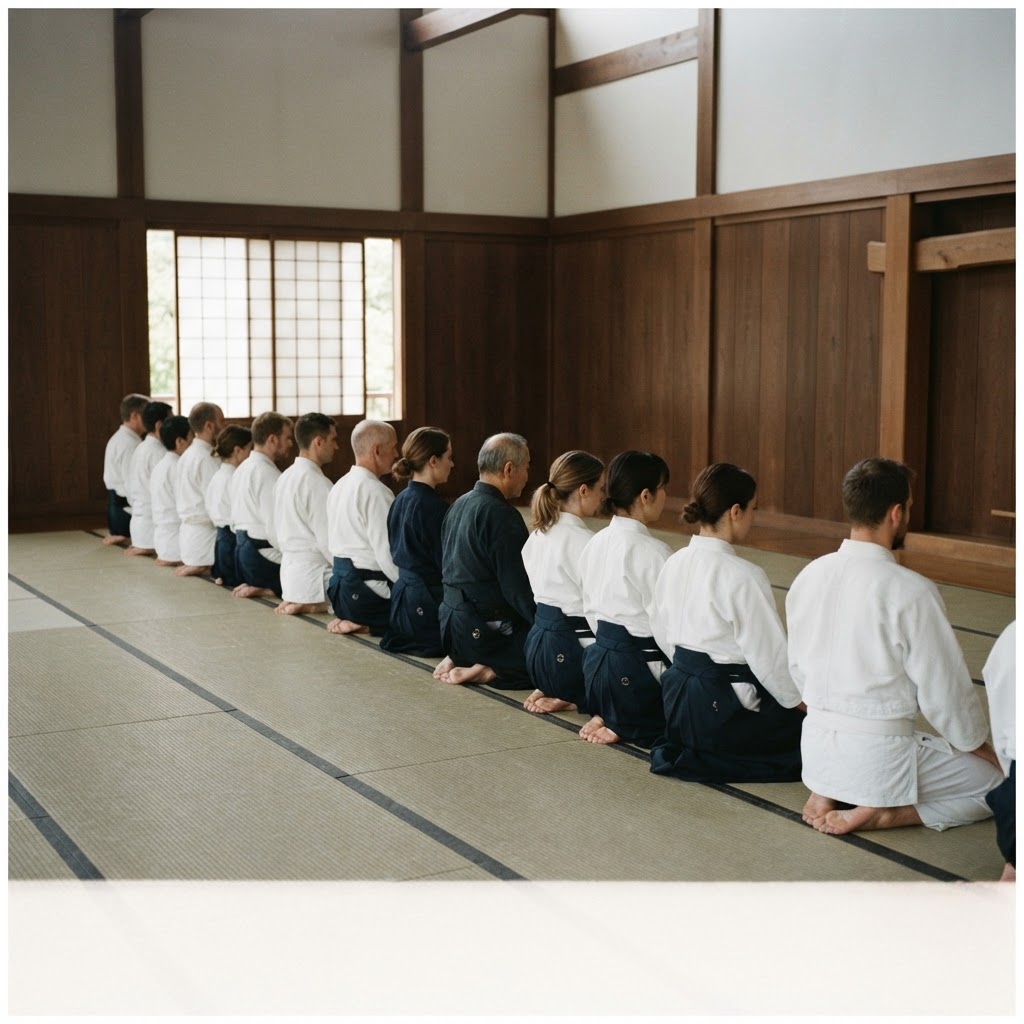
Most martial arts were born from the need to survive. Aikido was born from a different question: what if strength is not about defeating your opponent, but about meeting them without harm?
The word aikido means "the way of harmony with the spirit." It is one of the youngest of the Japanese martial arts, and one of the most unusual. There are no competitions, no tournaments, no winners. The goal is not to break an attacker, but to blend with their energy and redirect it - to transform conflict into resolution.
This is the story of how a single man turned a lifetime of combat into an art of peace.
One Man, One Vision
The Origins
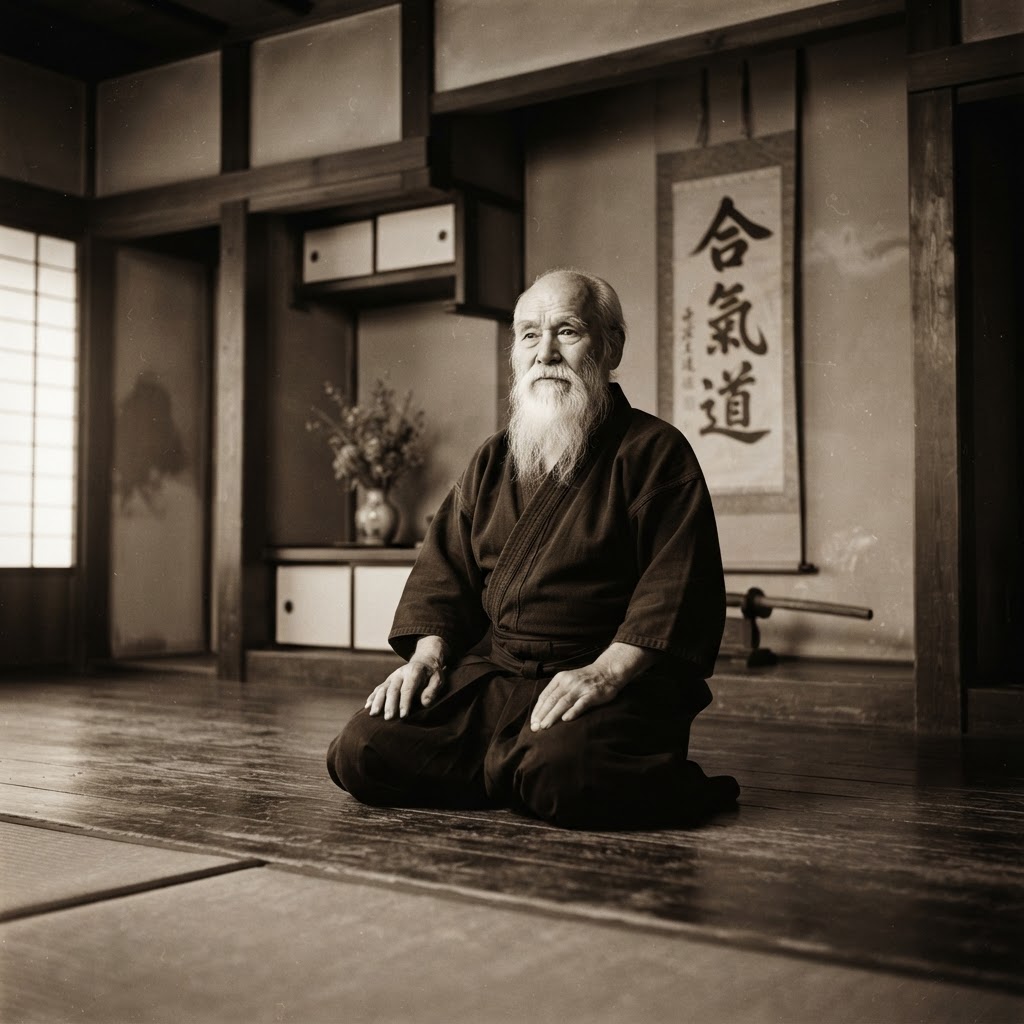
Aikido was created by Morihei Ueshiba, born in Japan in 1883. As a young man, he studied the fiercest martial traditions of his era - swordsmanship, spear, and the brutal joint-locking art of daito-ryu aiki-jujutsu. He became one of the most formidable fighters in Japan, capable of defeating multiple attackers at once.
But something shifted. After years of deep spiritual practice and the horrors of war, Ueshiba concluded that the true purpose of martial arts was not destruction. A true warrior, he believed, does not need to prove victory. In the 1930s and 40s, he began to refine his art - blending combat technique with a philosophy of reconciliation, until the violence dissolved into something entirely new.
Blending, Not Breaking
The Art of Harmony
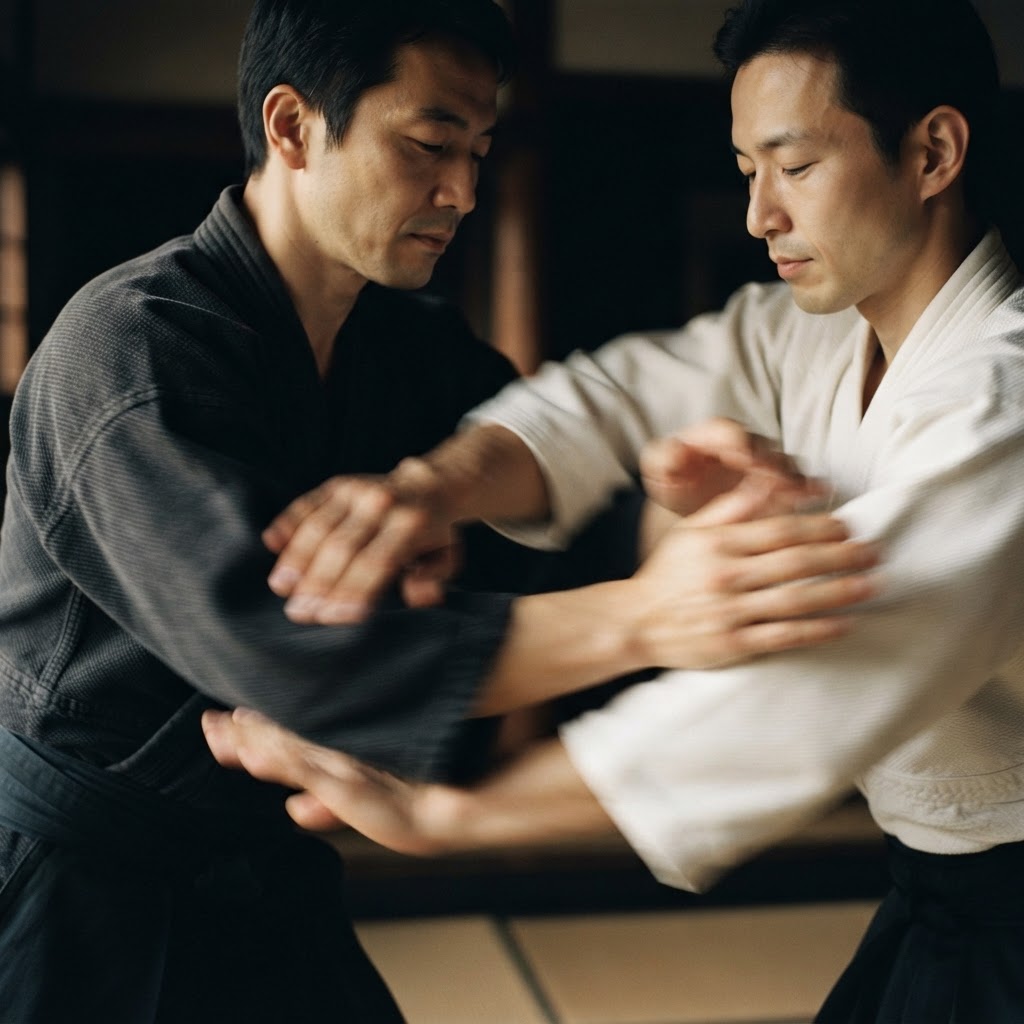
The core of aikido is simple to describe and difficult to master. When an attack comes, you do not resist it. You move with it, blend with its direction, and redirect its energy - so that the attacker's own force becomes the force that ends the conflict. Nothing is broken. No one is defeated in the traditional sense.
The movements are circular and flowing, drawn from the sword. The throws and pins are real, but they are applied with control and care. The aim is to protect the attacker as much as the defender. As Ueshiba wrote: "To injure an opponent is to injure yourself. To control aggression without inflicting injury is the Art of Peace."
From Japan to the World
The Spread
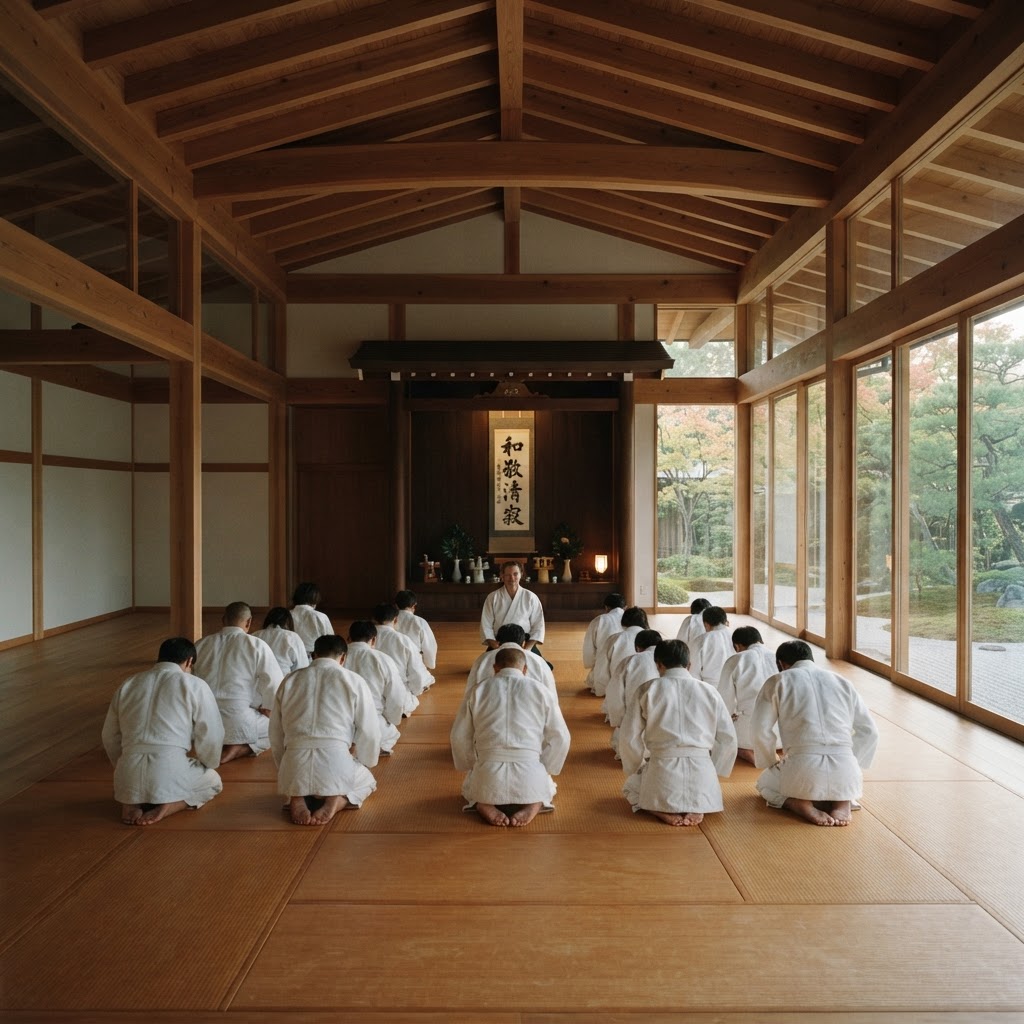
After the Second World War, aikido began to leave Japan. Ueshiba's students carried it across Europe, the Americas, and beyond. Today, aikido is practiced in hundreds of countries, in dojos that still preserve the same rituals: bowing, gratitude, the shared pursuit of harmony.
Its influence reaches far beyond the mat. The principle of blending rather than resisting has shaped conflict resolution, therapy, and even business. Aikido proved that a martial art could be fierce in its discipline and gentle in its purpose - that strength and compassion are not opposites, but two halves of the same practice.
Why we still practice
Victory over yourself.
Aikido asks something rare of its students: to train seriously without seeking to win, to face aggression without answering it with more aggression. The hardest opponent, Ueshiba taught, is always within - the ego that wants to dominate, the fear that wants to resist.
When you step on the tatami and blend with an attack instead of fighting it, you are not just learning a technique. You are practising a way of moving through the world - one where harmony is not weakness, but the highest form of strength. The way of harmony, still walking.